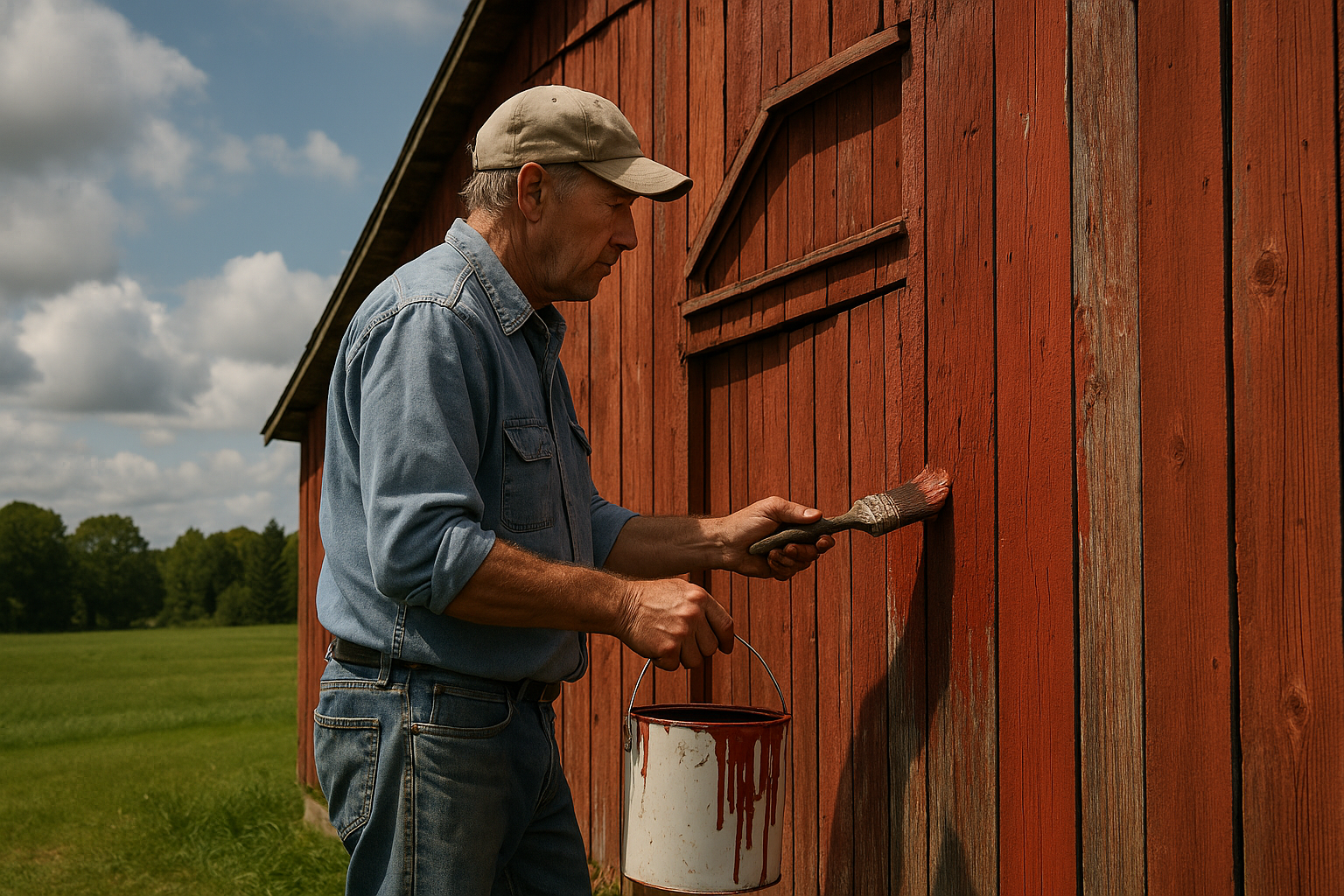
Preparation and Maintenance of Painted Barns
Why it matters
Proper preparation and ongoing maintenance extend the life of a painted barn. Painting protects the wood from weather damage and pests. Neglecting these steps can lead to costly repairs and structural problems.
Cleaning barn surfaces before painting
Removing dirt, dust, and old peeling paint is essential before applying a new coat. Pressure washing is common but must be done carefully to avoid damaging wood fibers. Using a mild detergent solution helps break down grime without harsh chemicals.
One common mistake is painting over loose or flaking paint, which causes poor adhesion and early failure. Allow surfaces to dry completely after cleaning to prevent trapping moisture under the paint, which can lead to rot.
Proper cleaning also reveals hidden damage that needs repair before painting. This step sets the foundation for a durable finish and reduces the risk of paint peeling or blistering.
For a broader understanding of barn care, see this Barn maintenance overview.
Repairing wood damage prior to painting
Wood damage such as rot, cracks, and insect holes must be addressed before painting. Failing to repair these issues can cause paint to peel and wood to deteriorate faster.
Rotting wood should be removed and replaced or treated with a wood hardener. Cracks and holes can be filled with an exterior-grade wood filler. Make sure repairs are smooth and flush with the surface to ensure even paint coverage.
Ignoring minor damage often leads to larger structural problems. Timely repairs protect the barn’s integrity and improve the paint’s lifespan.
Seasonal maintenance tips for painted barns
Seasonal inspections help catch problems early. In spring, check for damage caused by winter moisture and freeze-thaw cycles. Remove debris like leaves and dirt that can trap moisture against the wood.
Summer is a good time to touch up areas where paint has worn thin. Fall inspections should focus on sealing gaps and cracks to prevent moisture intrusion during winter.
Regular maintenance reduces the need for full repainting and protects the barn from accelerated wear caused by weather changes.
Repainting schedules for barns in Southern Ontario
Southern Ontario’s climate includes cold winters and humid summers, which affect paint durability. Typically, barns need repainting every 5 to 7 years here, depending on the quality of paint and surface preparation.
Choosing the right time to repaint is crucial. Late spring to early summer offers dry, warm conditions ideal for paint curing. Painting during damp or cold weather can cause adhesion problems.
Following local Painting guidelines Ontario ensures compliance with best practices and helps extend the life of paint jobs.
Protective measures against pests and rot
Preventing pest infestations and rot starts with good barn design and maintenance. Ensure proper ventilation to reduce moisture buildup, which attracts fungi and insects.
Applying insect repellents or wood preservatives before painting adds extra protection. Regularly inspect for signs of termites, carpenter ants, or wood-boring beetles.
Ignoring pest control can lead to severe wood damage that compromises structural safety and requires expensive repairs.


