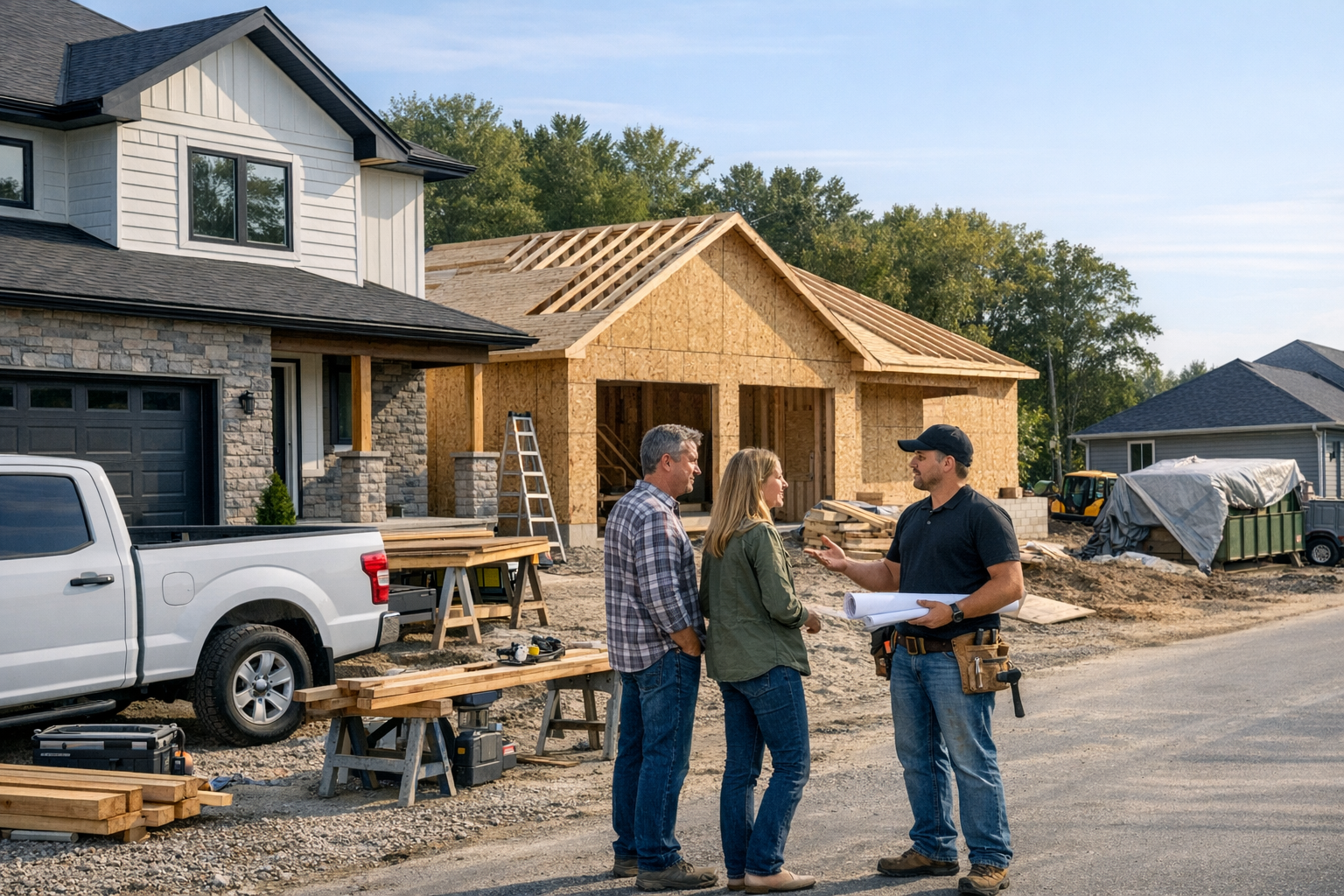
Choosing a custom home builder in Norfolk County
Why it matters
The home builder you choose will shape your budget, schedule, and daily experience for months. A polished sales meeting does not tell you how a team handles change orders, site issues, or finish quality. In Norfolk County, local permitting, trade availability, and weather can expose weak planning very quickly.
Questions to ask before hiring a custom home builder
Start with questions that reveal how the builder works under pressure. Ask who prepares the estimate, who manages the site, and who answers your calls once construction starts. Some firms sell the job well, then hand it to a different team with very different standards.
You should also ask how they handle allowances, delays, and plan changes. A vague answer is a warning sign. If the builder cannot explain their process clearly, small decisions can turn into expensive disputes later.
- Who is your main point of contact during design and construction?
- How are change orders priced and approved?
- What items are fixed price, and what items are still allowances?
One common mistake is focusing only on the total quote. A lower number may hide missing scope, weak specifications, or unrealistic allowances that grow after work begins.
Design-build firms versus traditional contractor models
A design-build firm keeps design and construction under one contract. That can reduce miscommunication and speed up decisions. It also means you need to confirm that the design side is strong, not just convenient.
The traditional model separates the designer and the builder. This can give you more independent oversight, but it also creates more handoffs. If drawings are incomplete, the contractor may price work differently than you expected, and disputes over responsibility can follow.
The real tradeoff is control versus coordination. Design-build can streamline budgeting early, but you may have fewer chances to compare pricing line by line. The traditional route can offer more competitive tendering, though it often demands tighter drawings and more owner involvement to avoid gaps.
Reviewing portfolios, craftsmanship, and past projects
A portfolio should show more than attractive kitchens and staged living rooms. Look for consistency across exterior details, trim work, tile layout, stair finishes, and how materials meet at corners and edges. Good craftsmanship tends to show up in the small transitions, not just the big photo moments.
If possible, speak with past clients about what happened after possession, not just during the build. Some builders produce beautiful homes but stumble on scheduling, communication, or problem resolution once defects appear.
Ask to see projects similar to your own in size, style, and complexity. A builder who excels at straightforward homes may struggle with custom layouts, difficult sites, or higher-end finish expectations. That is where a practical custom home checklist can help you compare one builder’s claims against another’s actual work.
Understanding allowances, specifications, and contract terms
This is where many custom home budgets drift. An allowance is only a placeholder amount. If it is too low for the level of finish you expect, you will pay the difference later.
Specifications matter just as much as drawings. A plan may show a window, but the contract should state brand, series, performance level, trim detail, and installation scope. If the specification is vague, you may assume one product while the builder prices another.
Read the contract with special attention to payment stages, exclusions, and delay language. The biggest failure mode here is assuming verbal promises are included. If a detail is not written into the agreement, it is much harder to enforce once work starts.
Evaluating warranty coverage and post-construction support in Norfolk County
Warranty coverage should be specific, with clear timelines and response procedures. Ask what is covered in the first year, what falls under manufacturer warranties, and how service requests are documented. In Norfolk County, seasonal movement, moisture issues, and exterior settlement can reveal themselves after the first few months, so support after handover matters.
You should also ask who handles deficiencies and how long service work typically takes. A builder with a defined custom home building process is often easier to evaluate because post-construction support should fit into that same system. If the answer is informal or unclear, expect slower follow-up when problems appear.
Look for a team that treats warranty work as part of the job, not an inconvenience. That usually shows up in written procedures, realistic timelines, and consistent communication after you move in.
How to make the final decision
Compare builders on clarity, not charm. The strongest candidate usually gives direct answers, detailed specifications, realistic pricing, and a contract that matches the discussions you already had.
If two builders seem close, choose the one with fewer assumptions in the paperwork and better evidence from past projects. That decision usually saves more stress than chasing the lowest initial number.


