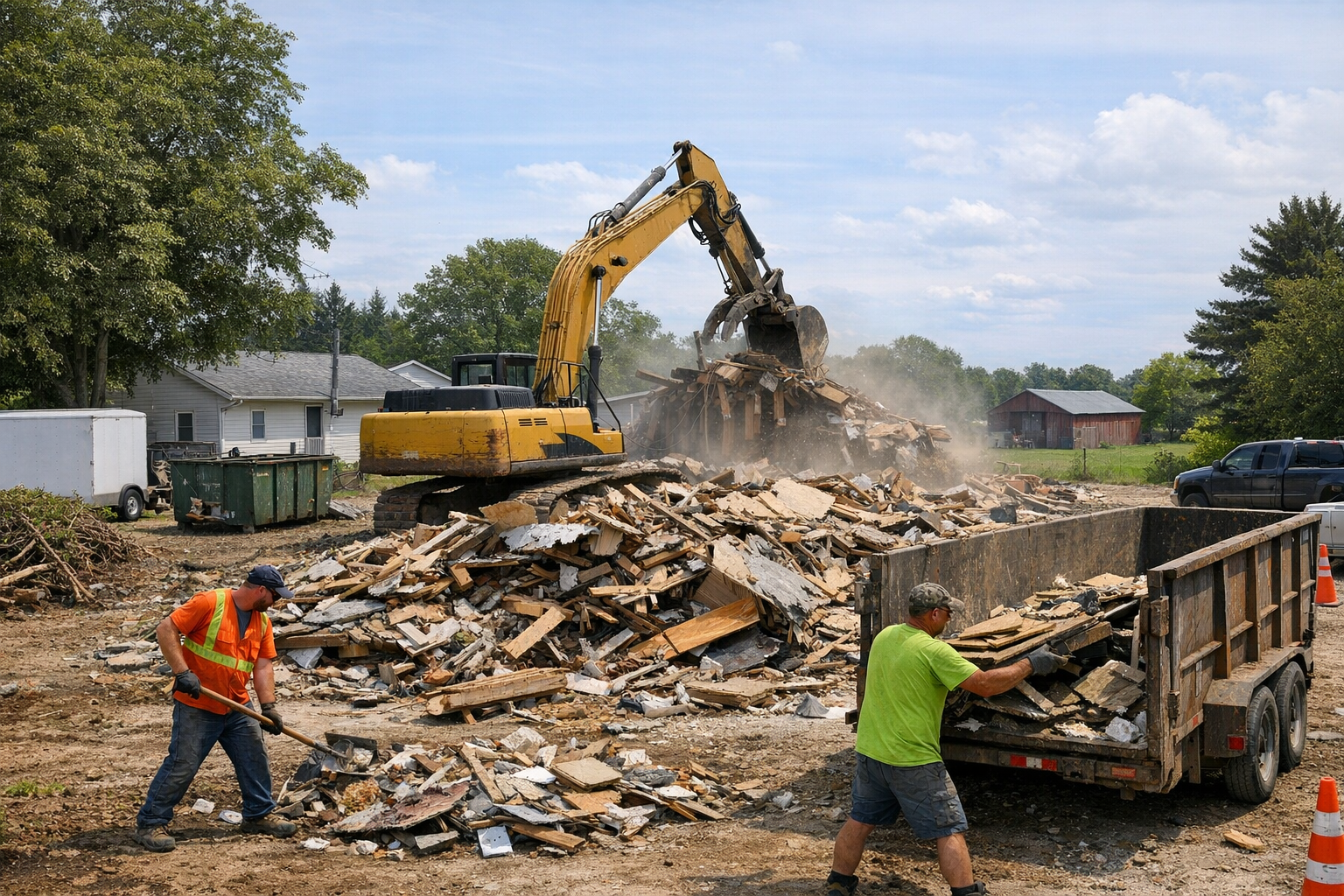
Residential demolition and cleanup in Norfolk County
Demolition work moves fast, but mistakes show up even faster. A poor plan can damage nearby structures, delay the next phase, and leave you with disposal problems that cost more than the tear-down itself. Properly planned and executed demolition and cleanup by a Norfolk County demolition contractor like HowieBins is definitely the way to go for swift destruction and debris removal.
House demolition planning and site preparation
Before any structure comes down, the site needs a clear sequence. That includes access for equipment, utility disconnections, hazard checks, and a plan for material separation.
One common failure is starting demolition before underground or overhead services are fully confirmed. That can stop the job immediately, or worse, create a serious safety incident. Tight lots also limit machine movement, so the order of demolition often has to change to avoid hitting fences, trees, or adjacent buildings.
- Confirm power, gas, water, and telecom disconnections
- Check for restricted access, soft ground, and nearby structures
- Set staging areas for bins, salvage, and machine travel
Garage, shed, and outbuilding removal
Small structures look simple, but they often create tricky disposal and access issues. Older garages may sit close to property lines, and sheds are often surrounded by decks, gardens, or overhead wires.
The biggest mistake is treating every outbuilding the same. A wood-frame shed can come apart quickly, but a garage with a thick slab or buried footings adds machine time and trucking. If that is missed in the quote or schedule, the cleanup phase usually drags behind.
Interior strip-outs for damaged or unsafe homes
Interior demolition is often the right first step when the structure itself may stay. It removes damaged drywall, flooring, insulation, cabinets, and non-structural framing so the condition of the shell becomes clear.
This work needs control, not speed alone. Cutting too deep into walls or ceilings can damage framing, plumbing, or electrical runs that were meant to stay. In homes with water, fire, or neglect damage, hidden rot and unstable sections are common, which means crews need to open areas in a deliberate order.
Sorting loads properly also matters during strip-outs. In Norfolk County, disposal rules can affect where materials go, and local waste management services may shape how debris is separated before hauling.
Debris hauling and post-demolition cleanup in Norfolk County
Cleanup is not just a final sweep. It includes loading mixed debris, pulling loose metal and wood, removing sharp fragments, and leaving the site ready for inspection or the next contractor.
A common problem is underestimating volume. Demolition debris expands fast once walls, roofing, and trim are on the ground. If bin capacity and truck timing are off, material piles up, access gets blocked, and equipment sits idle waiting for space to clear.
Cleanup standards should also be defined early. Some owners only need rough removal, while others need a near-finished site with nails, glass, and surface debris cleared before grading or rebuild work starts.
Concrete slab breakup and removal
A thin shed pad can be straightforward, but a garage slab may include thickened perimeters that resist quick breakup. If the next step is rebuilding, the crew also has to avoid over-excavating below the intended base. In Norfolk County, the timing of slab removal and rebuild planning often ties back to the building permit process, especially when a replacement structure is already scheduled.
Concrete removal is where many demolition jobs get more expensive than expected. Slab thickness, reinforcing steel, and buried edges all affect breaker time, loading time, and haul weight.
A solid demolition job leaves no surprises for the next trade. The best results come from clear sequencing, accurate debris planning, and a cleanup scope that matches what happens on site.


