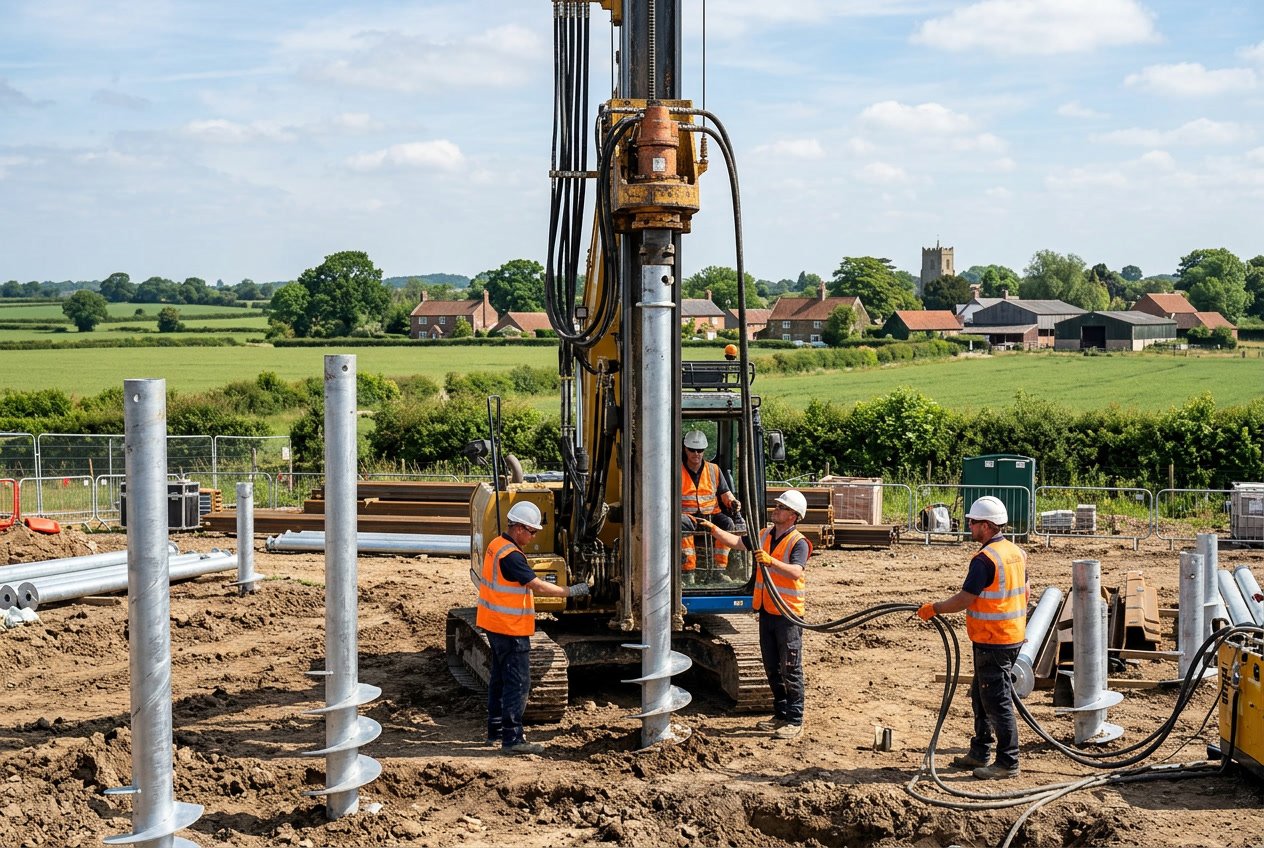
Making Your Building or Renovation Stable and Strong
Building projects need solid foundations that can handle different soil conditions and provide long-term stability. Helical piles offer a proven solution for structural support, using steel shafts with welded helical blades that are screwed deep into the ground to reach stable soil layers. These foundation elements work for new construction, additions, decks, and repairing existing structures that have started to settle or sink.
You might be wondering whether helical piles are the right choice for your project. These foundation systems deliver immediate load-bearing capacity without the delays of concrete curing, and they can be installed year-round in almost any weather. The installation process involves specialized equipment that rotates the pile into the ground while measuring torque to confirm it has reached the required depth and soil strength.
Your foundation needs depend on your specific soil conditions, structural loads, and project requirements. This page walks you through how helical piles work, why they perform well in local soil types, what happens during installation, and how professionals test them to verify they meet engineering specifications. You’ll also learn about using helical piles for foundation repair and underpinning when existing structures need stabilization.
Understanding Helical Piles and Their Structural Benefits
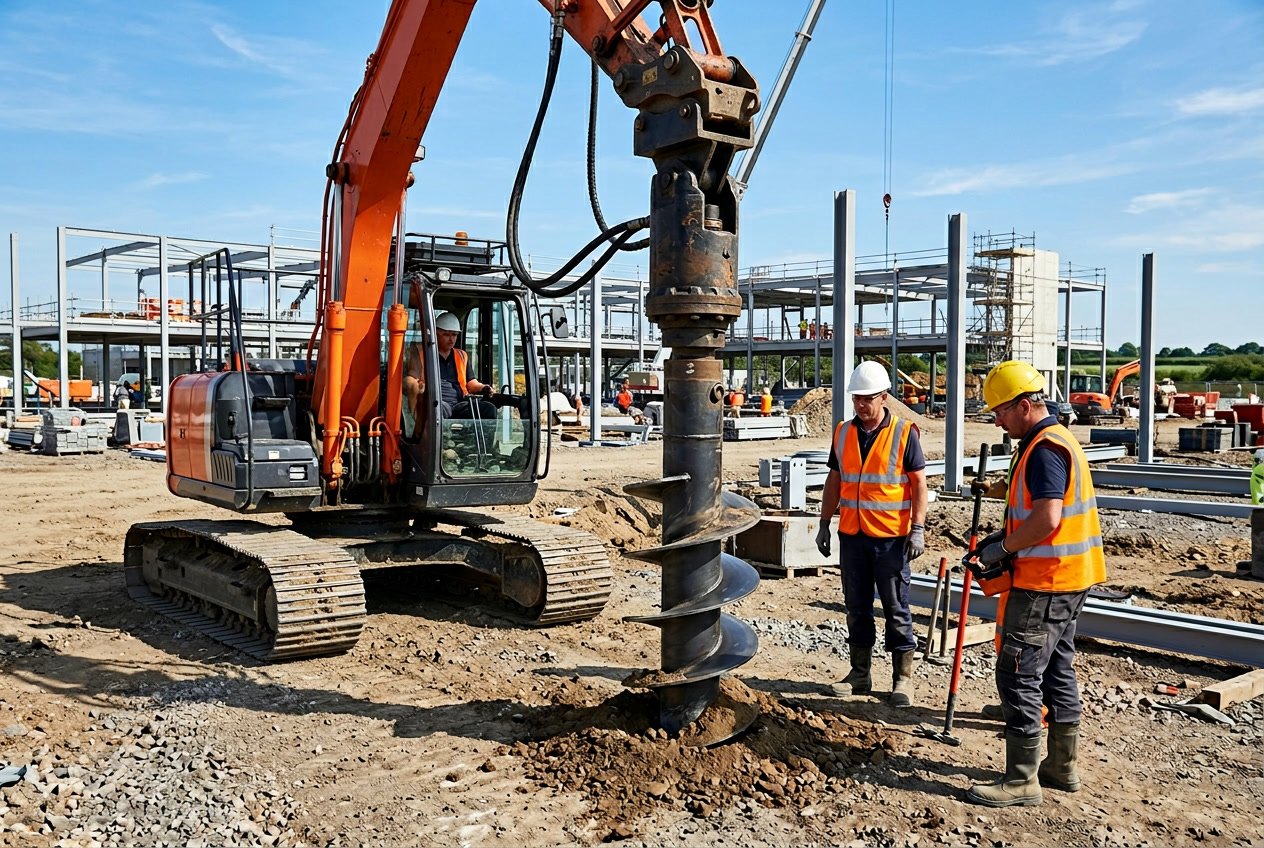
Helical piles transfer structural loads through steel shafts and helical plates into stable soil layers, offering immediate load-bearing capacity without curing time. These deep foundation solutions adapt to various soil conditions while providing verified structural support for residential and commercial projects.
What Are Helical Piles?
Helical piles are steel foundation elements consisting of a central shaft with one or more helical-shaped bearing plates welded along its length. The helical plates resemble large screws and rotate into the ground during installation, cutting through soil to reach load-bearing strata.
A single helical pier can support loads ranging from less than 1kN (225 lb) to over 5,000kN (1.125 million lb). The installation process uses hydraulic drive motors that screw the pile into the ground while monitoring torque. This torque measurement verifies the pile’s capacity during installation, eliminating the need for extensive geotechnical testing beforehand.
The helical anchors transfer your structure’s weight from the shaft to the bearing plates, which rest in competent soil or bedrock. This design principle allows screw piles to function effectively in conditions where traditional foundations struggle, including high water tables and weak surface soils.
Types of Helical Piles and Shafts
Helical pile systems come in different shaft configurations to match specific load requirements and installation conditions. Round shaft piles typically range from 1.5 to 3.5 inches in diameter and work well for light to medium loads. Square shaft helical piles offer greater resistance to bending and torsion, making them suitable for heavier structural applications.
The number and diameter of helical plates vary based on soil conditions and required capacity. Single-helix configurations work in uniform soil, while multi-helix designs distribute loads across multiple bearing depths. Plate diameters typically range from 6 to 14 inches, with spacing calculated to prevent soil disturbance between plates.
Extensions allow helical piers to reach deeper load-bearing strata when surface conditions are unsuitable. These extensions connect to the lead section through mechanical couplings designed to maintain structural integrity under load.
Comparison to Traditional Foundation Methods
Traditional concrete foundations require excavation, formwork, pouring, and curing time before they can bear loads. You’ll wait days or weeks for concrete to achieve design strength. Helical piles provide immediate load-bearing capacity after installation, with crews installing up to 20 piles in a single day.
Concrete and grout foundations depend on weather conditions and temperature for proper curing. Your helical pile installation proceeds in any weather, reducing project delays. The equipment footprint is smaller, allowing access to tight spaces and established landscapes without extensive site preparation.
Installation torque monitoring provides real-time capacity verification for each pile. Concrete foundations require separate load testing after curing. The foundation system can also be removed and reused if your structure needs relocation, while concrete represents a permanent commitment.
The Role of Helical Piles in Norfolk County Foundations
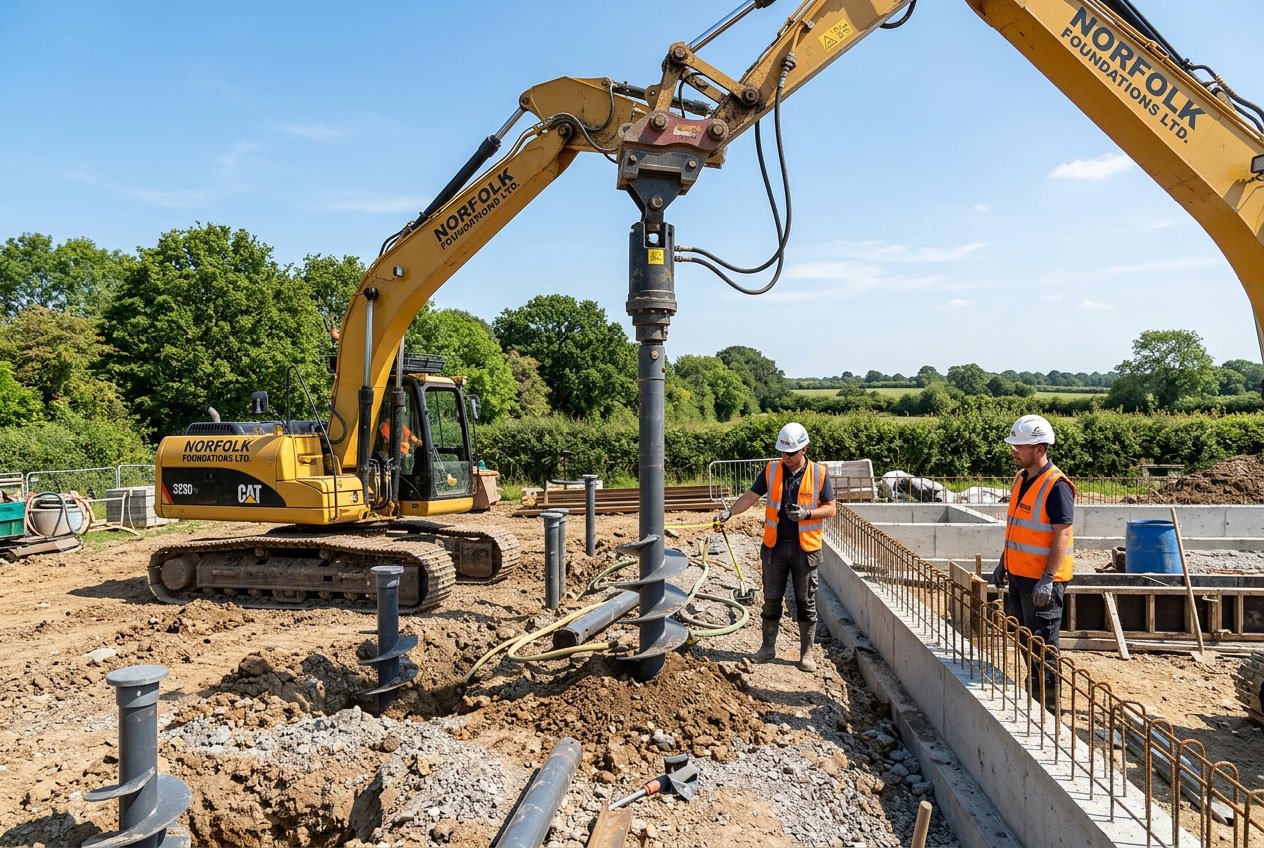
Norfolk County’s unique ground composition requires foundation solutions that can adapt to varying soil types and moisture levels. Helical piles provide reliable structural support across different property types while meeting strict engineering requirements.
Suitability for Local Soil Conditions
Norfolk County presents diverse ground compositions that can challenge traditional foundation methods. Your property may sit on sandy soils near the lakeshore, clay-heavy areas inland, or zones with high water tables.
Helical piles transfer loads to deeper, stable soil layers regardless of surface conditions. The helical plates on these steel shafts rotate into the ground until they reach load-bearing strata. This makes them particularly effective when you’re dealing with soft or unstable surface soils.
Local installers assess your specific soil conditions to determine the correct installation depth and torque requirements. Each pile gets driven to precise specifications based on what exists below your building site. The installation process doesn’t require excavation or soil removal, which prevents disruption to surrounding areas.
You can install these foundations in conditions where other methods fail. Wet soils, frost-susceptible zones, and areas with limited access all work for helical pile installation. The system adapts to what your property presents rather than requiring your site to meet specific conditions.
Applications in Residential, Commercial, and Agricultural Projects
Your foundation needs in Norfolk County vary based on project type. Postech systems support residential, commercial, and agricultural structures throughout communities like Simcoe, Delhi, Waterford, and Port Dover.
Residential applications include:
- New home construction
- Deck and porch supports
- Garage foundations
- Addition supports
Commercial projects use helical piles for retail buildings, offices, and industrial facilities. These deep foundation elements can handle loads from small structures to large commercial buildings without extensive site preparation.
Agricultural operations benefit from quick installation times that don’t interfere with farming schedules. Barn foundations, equipment storage buildings, and grain facilities all utilize this technology. You avoid the concrete curing delays that traditional foundations require, which means faster project completion.
Compliance with Building Codes and Standards
Your helical pile installation must meet Canadian building standards and local regulations. Factory-engineered Postech systems are tested and certified to ensure compliance with these requirements.
Engineers calculate load capacities based on soil testing and structural demands. Each installation receives documentation showing torque readings and depth measurements. This data proves your foundation meets the specifications required by building inspectors.
The installation process follows strict protocols for torque application and pile placement. Your installer monitors these factors during the work to maintain quality standards. Professional certification ensures the crew understands proper techniques and safety requirements.
You receive engineered drawings that show pile locations, depths, and load ratings. These documents become part of your building permit application and permanent property records. For projects in this area, Norfolk County’s building permit process and inspection requirements are worth reviewing early.
Installation Process for Optimal Structural Support
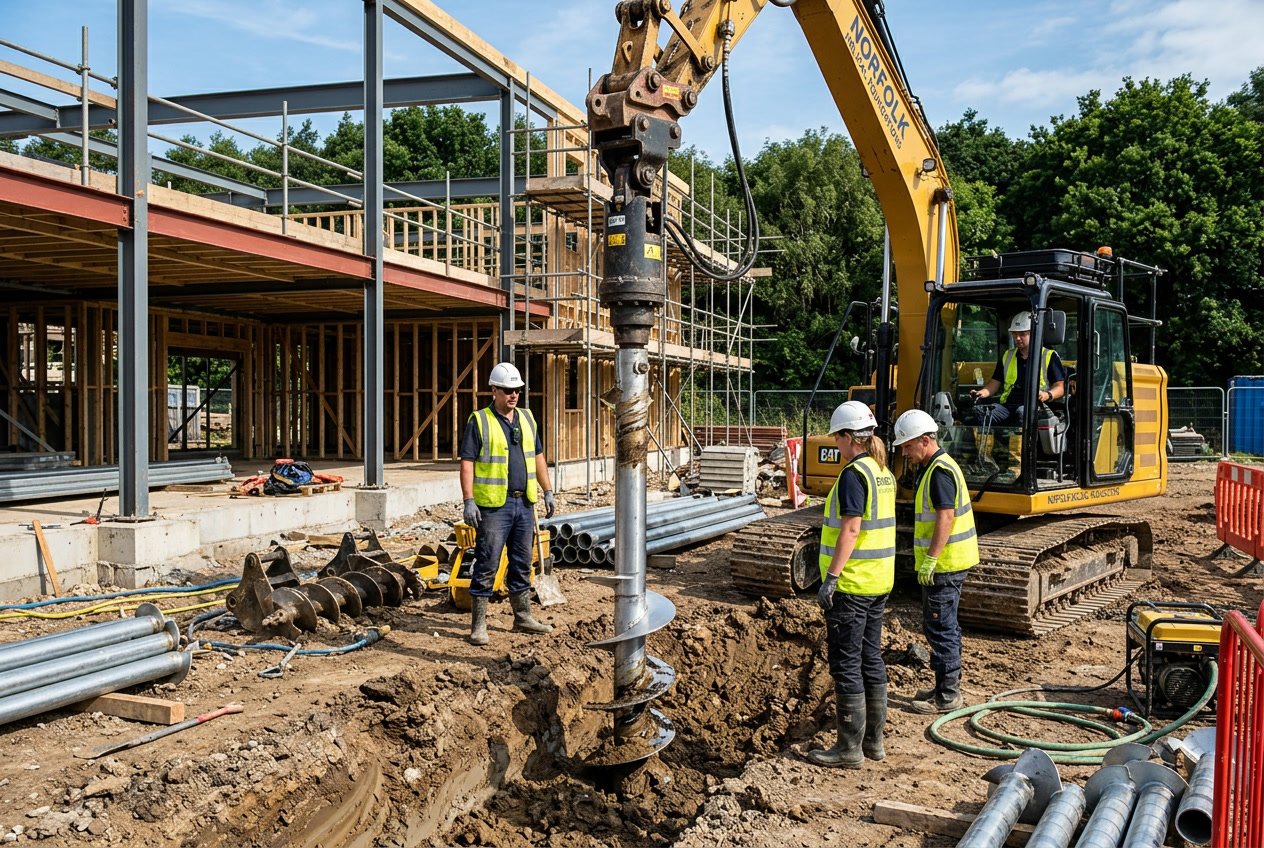
The installation process requires careful planning and execution to ensure helical piles deliver maximum structural support. Proper site assessment, specialized equipment, and systematic installation steps determine the long-term performance of the foundation system.
Site Preparation and Assessment
Before beginning helical pile installation, you need to conduct thorough soil testing to understand subsurface conditions. Standard Penetration Tests (SPT) and Cone Penetration Tests (CPT) reveal soil density, composition, and bearing capacity at various depths. These tests help you determine the appropriate pile size, helix configuration, and installation depth required for your project.
You should clear the work area of debris, vegetation, and obstacles that could interfere with equipment operation. Mark exact pile locations based on your structural plans, ensuring proper spacing and alignment. Level the ground where equipment will operate to maintain stability during installation.
Access requirements vary depending on installation equipment size. Verify that your site allows equipment entry and maneuvering space. Check for underground utilities and mark their locations to prevent damage during pile driving operations. In Ontario, that means requesting locates through Ontario One Call before ground disturbance begins.
Equipment and Tools Used
Hydraulic torque motors provide the rotational force needed to screw piles into the ground. These motors attach to excavators or skid steers, allowing operators to control installation speed and torque levels precisely. The torque reading during installation indicates when the pile reaches adequate bearing capacity.
You’ll need extension sections to achieve proper embedment depth in your soil conditions. Couplers connect shaft sections securely as you advance the pile deeper. A torque indicator or monitoring system tracks resistance throughout the installation process.
Mini-excavators work well for residential applications where space is limited. Larger commercial projects require track-mounted equipment or crane-assisted systems to handle heavier loads and longer pile sections. Safety equipment includes hard hats, gloves, steel-toed boots, and high-visibility vests for all crew members.
Step-by-Step Installation Procedure
Position the lead section of the helical pile vertically at the marked location. Attach the hydraulic drive head to the pile shaft, ensuring a secure connection. Begin rotation at low speed to establish proper alignment as the helices engage the soil.
Monitor torque readings continuously as the pile advances. Increasing torque indicates the pile is reaching competent bearing soil. You can reduce installation time by maintaining consistent rotation speed while avoiding excessive force that could damage the pile or equipment.
Add extension sections as the pile descends below the drive head. Each coupling must be tightened to manufacturer specifications to ensure structural integrity. Continue driving until you achieve the target torque value that corresponds to your required load capacity.
Stop installation when torque readings confirm adequate bearing. Record final depth and torque for quality control documentation. Cut the pile shaft to the specified elevation or attach brackets for structural connections.
Critical Testing and Monitoring Procedures
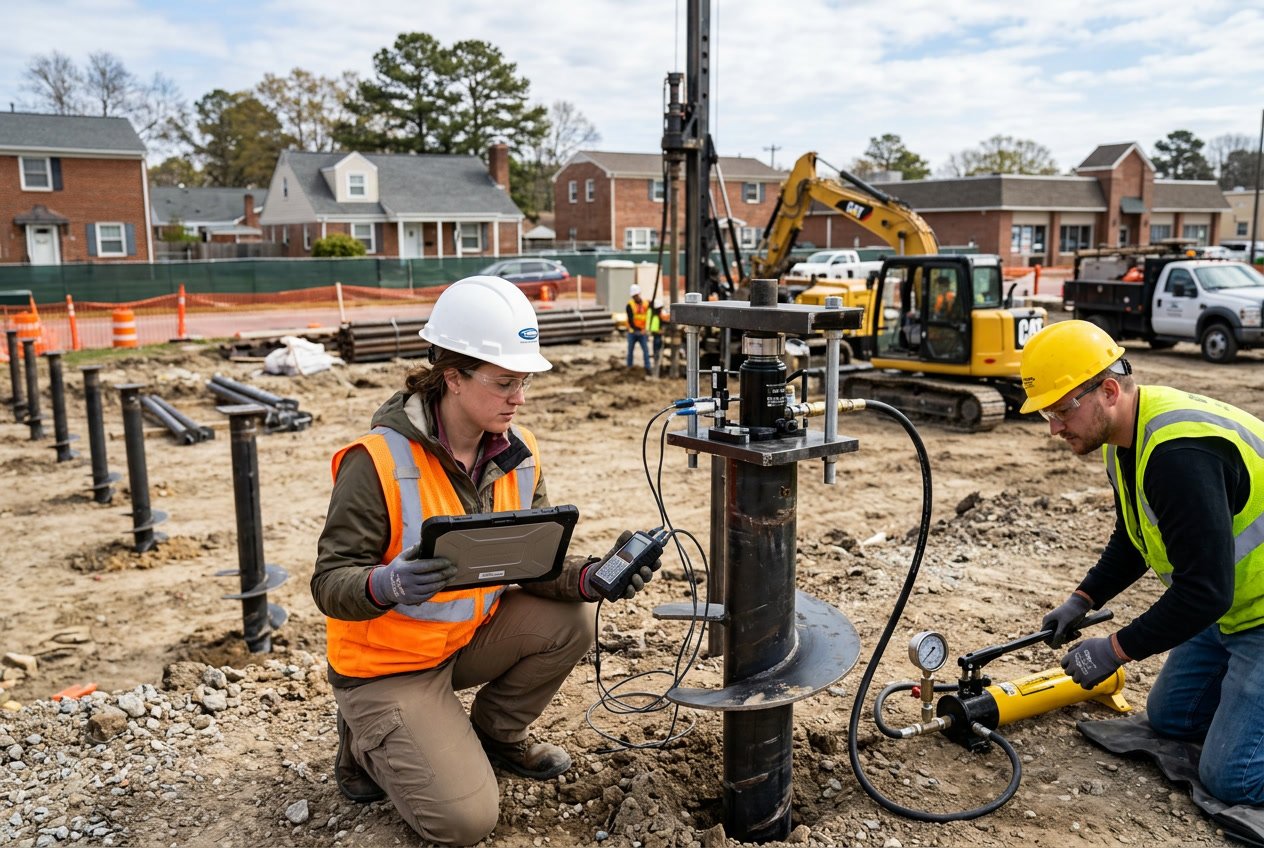
Proper verification methods confirm that helical piles can handle the loads they’re designed to support. Testing procedures and installation monitoring work together to validate both structural capacity and compliance with engineering specifications.
Load Testing for Safety and Performance
Load testing measures how well your helical piles resist compressive, tension, or shear forces before construction begins. Engineers have used this verification method since 1838, when helical piles were first installed at the Maplin Sands Lighthouse.
During a load test, hydraulic jacks apply controlled pressure to the pile while sensors measure movement and resistance. The test typically continues until the pile reaches 150-200% of its design load. This proves the pile can safely handle the actual structural loads it will experience.
You have several testing options available. Proof load tests verify minimum capacity requirements. Ultimate load tests push piles to failure to establish maximum capacity. Creep tests measure how piles perform under sustained loads over time.
Advanced testing procedures provide detailed data for engineers and inspectors to review. The results help confirm that your foundation meets design specifications before you proceed with construction. This verification step protects your investment and ensures structural safety for years to come.
Torque Monitoring and Depth Verification
Installation torque directly correlates to the bearing capacity of your helical piles. As the installer drives each pile into the ground, monitoring equipment records the rotational resistance at specific depth intervals.
Most projects require continuous torque readings throughout installation. Your inspector should verify that final torque values match or exceed the minimum requirements in your project specifications. The equipment measures torque in foot-pounds, and these readings help predict load capacity based on empirical formulas.
Depth verification ensures piles reach suitable bearing strata. The installer measures total penetration depth and records the location of each helix plate as it advances. You need this data to confirm piles extend into competent soil layers that provide adequate support.
Inspection responsibilities include checking that specified lead sections and extensions arrive on site before installation begins. Your inspector documents any deviations from planned depths or unexpected soil conditions encountered during installation.
Repair, Underpinning, and Structural Integrity Solutions
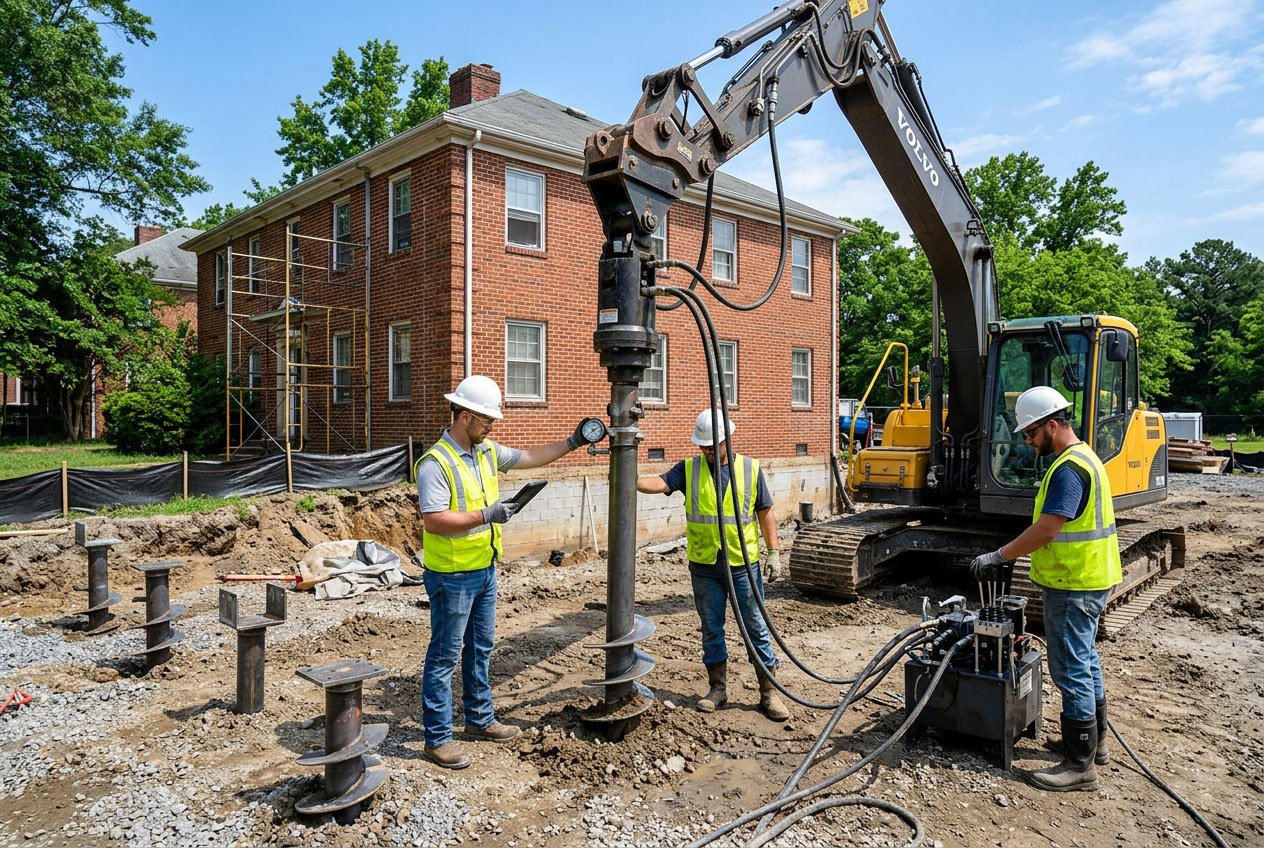
Helical piles provide effective solutions for fixing damaged foundations and strengthening existing structures. These steel systems transfer building loads to stable soil layers while minimizing disruption to your property.
Underpinning Foundations with Helical Piles
Underpinning services can strengthen and reinforce existing foundations when your building shows signs of settlement or weakness. The process involves installing helical piles beneath your current foundation to reach stable soil conditions. Each pile gets screwed into the ground until it meets specific torque requirements that match the soil’s load-bearing capacity.
The installation equipment measures torque levels as the pile goes deeper into the earth. This measurement tells the installer when the pile has reached soil strong enough to support your structure. Heavy steel brackets then connect the piles to your foundation, transferring the building’s weight to these new support points.
You can address foundation problems without major excavation or damage to your landscape. The process works well in tight spaces between buildings where traditional repair methods would risk nearby structures.
Foundation Repair Applications
Foundation repair with helical piles addresses several common problems:
- Cracks in exterior walls or foundation
- Cracks in interior walls or floor slabs
- Windows or doors that stick or won’t open properly
- Chimneys pulling away from the home
Your foundation can shift when soil conditions vary across your property. Some areas may contain soft sand while others have dense clay. This inconsistency causes uneven settling that warps floors and creates cracks. Helical piles provide consistent support regardless of soil type by reaching down to stable layers.
The piles work for homes of any size. They get installed deep enough to reach firm soil that can support your structure’s weight. You can lift and level settled foundations or stabilize areas showing movement.
Ensuring Long-Term Stability
Helical piles create a stable foundation that resists the soil movement affecting traditional concrete footings. The galvanized steel construction lasts over 20 years while resisting corrosion. Steel piles don’t expand and contract with temperature changes like concrete does.
You get immediate structural support without waiting for concrete to cure. The piles can be installed in any weather, including rain and snow. They work in high water table conditions where concrete struggles.
Each pile gets engineered to hold a specific weight load based on your structure’s requirements. The torque measurement during installation confirms each pile reaches the necessary depth and soil density. This verification ensures your foundation repair delivers the structural integrity your building needs.
Advantages and Considerations for Using Helical Piles
Helical piles deliver quick installation with minimal disruption while providing reliable structural support across challenging soil conditions. Understanding their capabilities in terms of time savings, load capacity, and long-term performance helps you make informed decisions for your foundation needs.
Time Efficiency and Minimal Site Disturbance
Helical pile installation typically completes in hours rather than the days or weeks required for traditional concrete foundations. Hydraulic drive motors screw the piles directly into the ground, eliminating the need for excavation, formwork, or concrete curing time. This means your construction schedule moves forward immediately after installation.
The process produces minimal noise and vibration compared to driven piles or excavation equipment. You won’t deal with large concrete trucks, extensive digging, or soil removal that creates mess and delays. This approach particularly benefits projects near existing structures or in areas where you need to maintain normal operations during construction.
Weather conditions rarely halt helical pile work. Unlike poured concrete that requires specific temperature ranges and dry conditions, you can install this foundation system in various weather scenarios without compromising quality or timeline.
Load-Bearing Capacity and Design Flexibility
Helical piles handle both compressive and tensile loads, making them adaptable for different structural requirements. The load-bearing capacity gets verified during installation through real-time torque measurements, which correlate directly to the pile’s strength in the surrounding soil. This immediate feedback allows installers to adjust depth and configuration as needed.
You can customize the foundation system by selecting different helical plate sizes, shaft diameters, and pile depths based on your specific load requirements. If your project needs change or you plan future expansion, additional piles integrate easily without major site disruption.
The versatility of helical piles for different applications extends from light residential decks to multi-story commercial buildings. They work in clay, sand, silt, and areas with high groundwater where other foundation types struggle.
Maintenance and Longevity
Helical piles require minimal maintenance once installed. The steel construction with proper corrosion protection provides decades of reliable service. You should consider the soil chemistry and moisture conditions at your site, as these factors influence the coating or galvanization requirements.
Installation precision matters for long-term performance. Proper geotechnical evaluation before installation ensures the piles reach suitable bearing strata. Unlike some foundation repairs that involve extensive excavation, any necessary adjustments or additions to helical pile systems can happen with limited disruption.
The foundation system performs best when engineered correctly for your specific soil conditions and structural loads. Very dense or rocky soils may limit installation depth, while highly variable soil layers require careful design consideration to reduce installation time without sacrificing capacity.
Frequently Asked Questions
Helical piles offer specific advantages for foundation work, with load capacities reaching up to 500,000 pounds and installation times measured in hours rather than weeks. The performance of these steel foundation systems depends heavily on soil conditions and proper engineering calculations.
What are the primary advantages of using helical piles for foundation support in residential construction?
Helical piles provide immediate structural support as soon as installation is complete. You don’t need to wait for concrete to cure or dry before building on top of them.
These steel foundation elements install quickly with minimal ground disturbance. Your property stays cleaner because there’s no concrete mixing or pouring required on site.
The installation process works in nearly any weather condition. You can have your foundation installed during winter months when traditional concrete work would be impossible.
How do helical piles compare to traditional concrete foundations in terms of cost and installation time?
Helical pile installation takes hours instead of weeks. A typical residential project can be completed in one day, while concrete foundations need several days for excavation, forming, pouring, and curing.
The total project cost often ends up lower with helical piles. You save money on labor, equipment time, and site cleanup since the installation process is much faster.
Concrete foundations require specific ground conditions and can’t reach deeper stable soil layers. Helical piles let you anchor your structure at whatever depth provides the best stability for your specific site.
Can helical piles be used for both new construction and foundation repair in Norfolk County?
You can use helical piles for new buildings, additions, decks, and various outdoor structures. Professional installers in Norfolk County handle both residential and commercial applications.
Foundation repair is another common application. Helical piles work well for underpinning existing structures that have settlement issues or need additional support.
The versatility of these systems makes them suitable for challenging soil conditions. You get reliable performance whether you’re building something new or fixing an existing foundation problem.
What are the typical load-bearing capacities of helical piles, and how are they determined?
Helical piles can support up to 500,000 pounds depending on the pile size and soil conditions. The actual capacity for your project gets determined during installation through torque measurements.
Installers use pressure gauges connected to the hydraulic motor to measure the force needed to drive each pile. These readings convert to torque values that indicate the load capacity of each installed pile.
More advanced systems measure torque directly at the motor and send readings to an electronic monitor. This real-time data ensures each pile meets the engineered specifications for your structure.
What is the process involved in installing helical piles, and what equipment is necessary?
The installation requires specialized hydraulic equipment that rotates the steel shaft into the ground. The helical plates on the shaft pull the pile down as it turns, similar to how a screw enters wood.
Your installer positions the pile at the designated location and applies steady rotational force. The pile advances into the ground until it reaches the required depth and torque reading.
The entire process creates minimal vibration and noise compared to driven piles. You don’t need large excavations or concrete delivery trucks on your property.
How does soil type in Norfolk County affect the performance and selection of helical piles for structural support?
Soil compaction directly affects bearing capacity, with denser soils providing greater support. Your installer determines the exact weight each pile can handle based on the specific soil conditions at your site.
Different soil types require different pile configurations. Clay, sand, and mixed soils each interact differently with the helical plates, so engineers select the appropriate shaft diameter and helix size for your conditions.
Soil characteristics like pH levels and moisture content affect the long-term durability of the steel. Engineers calculate these factors to ensure your foundation will last 75 years or more under normal conditions.


